How to get your dog used to the bicycle trailer: tips & exercises
Most four-legged friends need time to get to know a bicycle and trailer. With training in small steps, getting used to it usually works surprisingly quickly. This guide shows you how to get your dog used to the bicycle trailer.
Lena Kravcov
Head of Design & Marketing
The key points in brief
Getting your dog used to the bicycle trailer
Always approach getting your dog used to the trailer in small steps that build on one another, from the stationary trailer to the first real ride. From the very beginning, link the trailer with something positive. Repeat each training step several times a day in short sessions before moving on to the next one.
Greater flexibility
Why is a dog trailer for your bicycle worthwhile?
Not every dog can or wants to run alongside a bicycle. Growing puppies, older dogs,
small breeds or animals with health limitations benefit particularly from a dog trailer. On long routes or
in high temperatures a trailer also offers the chance to rest along the way.
The dog trailer is the safe choice for all dogs that cannot run alongside a bike.
That way your dog stays part of your bike tours even when it can no longer keep up on its own. Qeridoo has been developing bicycle trailers for children for years and therefore knows exactly what matters for the safety and comfort of passengers on four paws.
When can you start getting your dog used to the bicycle trailer?
In principle any dog can get used to a bicycle trailer, regardless of age or previous experience. All that matters is that your dog is physically healthy and has no acute pain that would make sitting or lying in the trailer difficult.
With puppies you can start playful familiarization early, as long as you stick to short, calm practice sessions. Older or physically limited dogs can usually get used to it well too, provided you take enough time.
More comfort
How long does it take a dog to get used to a dog trailer?
There is no blanket time frame, because every dog learns at its own pace. Some dogs accept the trailer after just a few days, others need several weeks before they relax completely while riding.
What matters is not speed but that you skip no step of the training. A dog that is put into a closed cabin too early, or got used to faster riding too quickly, is more likely to develop fear than a dog that is introduced calmly to each new stimulus.
Getting your dog used to the dog trailer step by step
Getting your dog used to a dog trailer works best in clearly separated stages. Each step builds on the
previous
one and only when one step works in a relaxed way does the next one follow. That way your dog gradually links the trailer with a
positive feeling instead of with stress.
Training with dogs always happens in small steps.
Step 1: Get to know the trailer calmly Set the trailer up without its wheels indoors or in the garden and leave all
openings open. A familiar blanket inside and a few treats make the trailer even more appealing. Reward every
approach with praise, but never force your dog to get in.
Step 2: Practice getting in and closing the door
As soon as your dog gets in voluntarily, you can let it stay briefly in the stationary trailer while you speak calmly
nearby. In the next step, close the door as a trial and open it again after a short time. Reward relaxed behavior
immediately.
Step 3: First movements without the bicycle Now pull the trailer by hand a few meters through the garden or
hallway, without hitching it to the bicycle. Short, jolt-free movements and a calm voice help your dog associate movement with
safety. A filled chew also provides a pleasant distraction.
Step 4: Trailer on the bicycle and first
test rides Only hitch the trailer to the bicycle once the previous steps work in a relaxed way. Make sure the bicycle
and trailer stand securely and without wobbling while your dog gets in. Ride the first laps on level, quiet ground and for only a few
minutes.
Step 5: Increase riding time and everyday use Gradually extend the rides and include different
surfaces as well as more environmental stimuli. That way the dog trailer becomes a normal part of your shared
bike tours step by step.
Do each step in several short sessions spread across the day, rather than practicing in one long session.
It has been shown that
dogs learn better in short, interrupted stages than in one long training session (1).
Why does my dog bark or panic in the bicycle trailer?
If your dog barks, howls or panics in the bicycle trailer, it rarely has anything to do with defiance. Usually fear or
being overwhelmed
is behind it, because a training step was skipped too quickly. It may also be that your dog is simply excited or
would rather run outside.
Your dog may be stressed at first. In that case it is best to go back a step in the training.
Watch closely in which situation the behavior occurs: right when getting in, only during the ride or only on certain surfaces. This observation helps you target exactly the right point in the training.
If your dog panics, it makes sense to take the training back a step and calmly repeat the relevant exercise. With persistent, strong fear, support from a dog trainer can be worthwhile.
How do you calm an anxious dog in a bicycle trailer?
Familiar objects such as a blanket it knows or a favorite toy give your dog a sense of security in the trailer. A filled chew provides additional distraction and links the time in the trailer with something pleasant.
With an anxious dog, set off particularly slowly and initially avoid busy routes with many stimuli. If your dog is very unsure, it is better to go back to an earlier training step than to force the training.
Calm, steady riding also contributes a great deal to relaxation. Good suspension noticeably reduces shocks and makes the ride considerably more pleasant for anxious dogs.
What should you look for in a bicycle trailer for your dog?
Besides the training, the trailer itself also plays an important role in successfully getting your dog used to it. A
dog trailer should suit the size of your dog, offer sufficient air circulation and allow for calm handling.
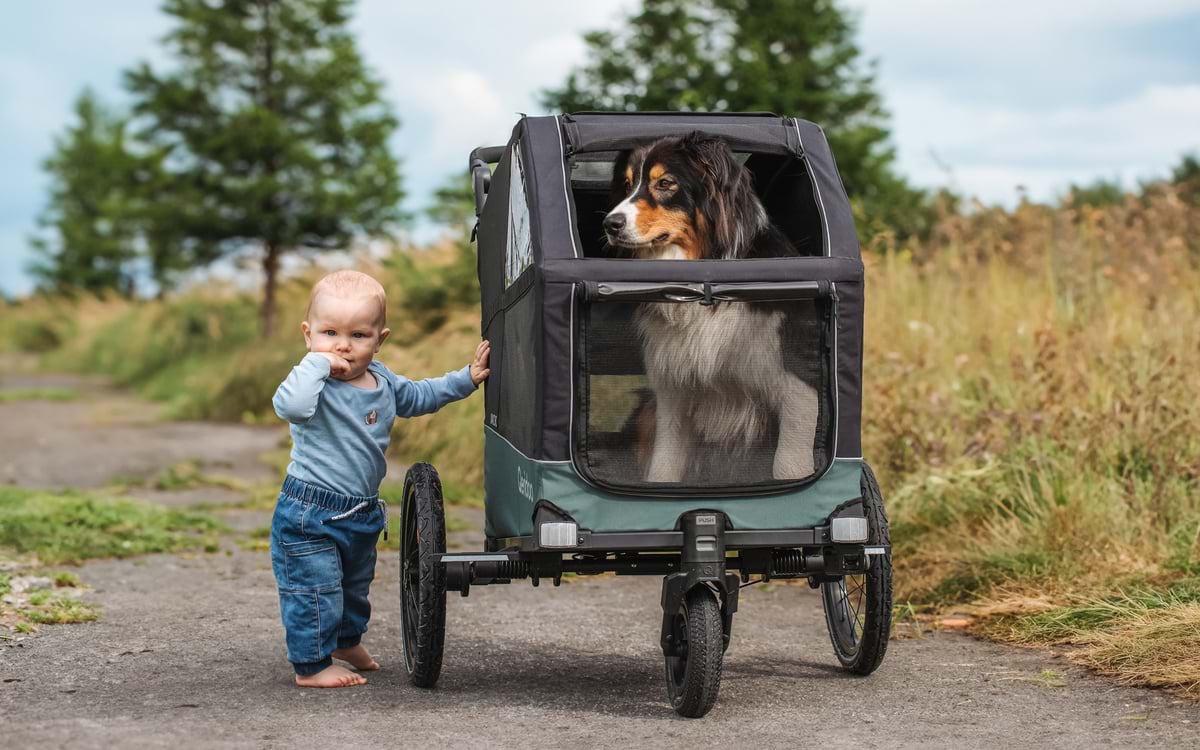
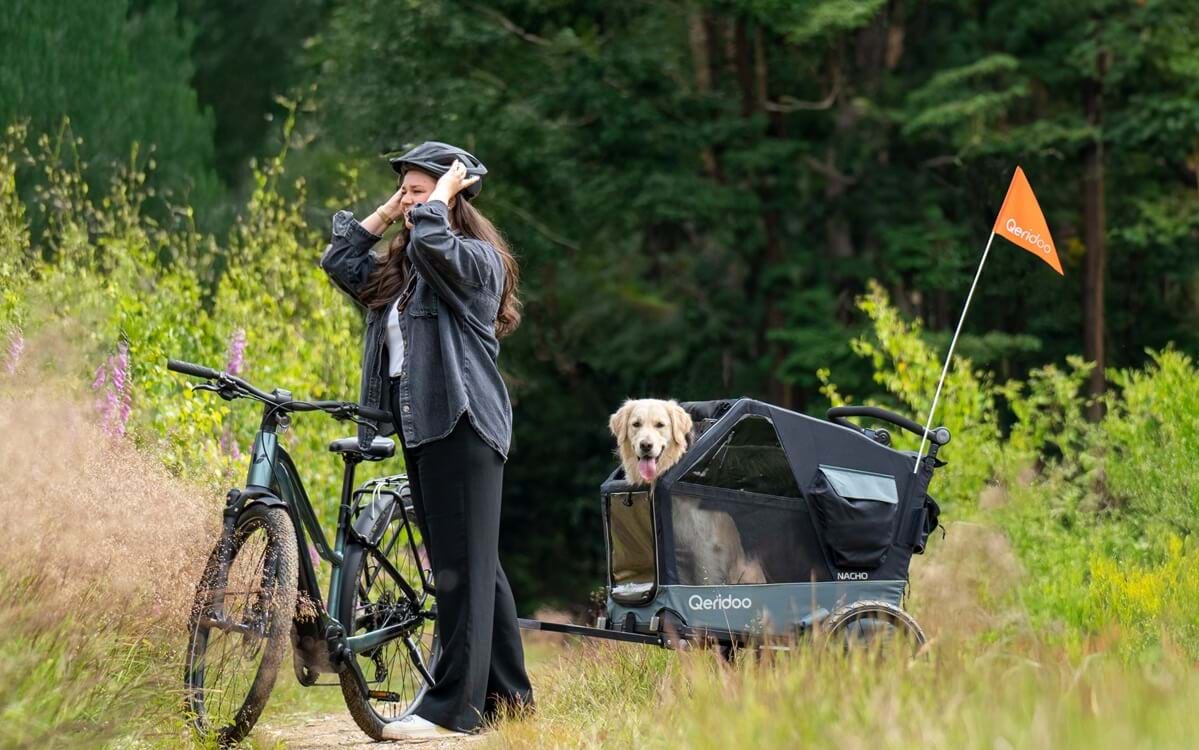
A species-appropriate dog trailer offers your dog comfort and safety.
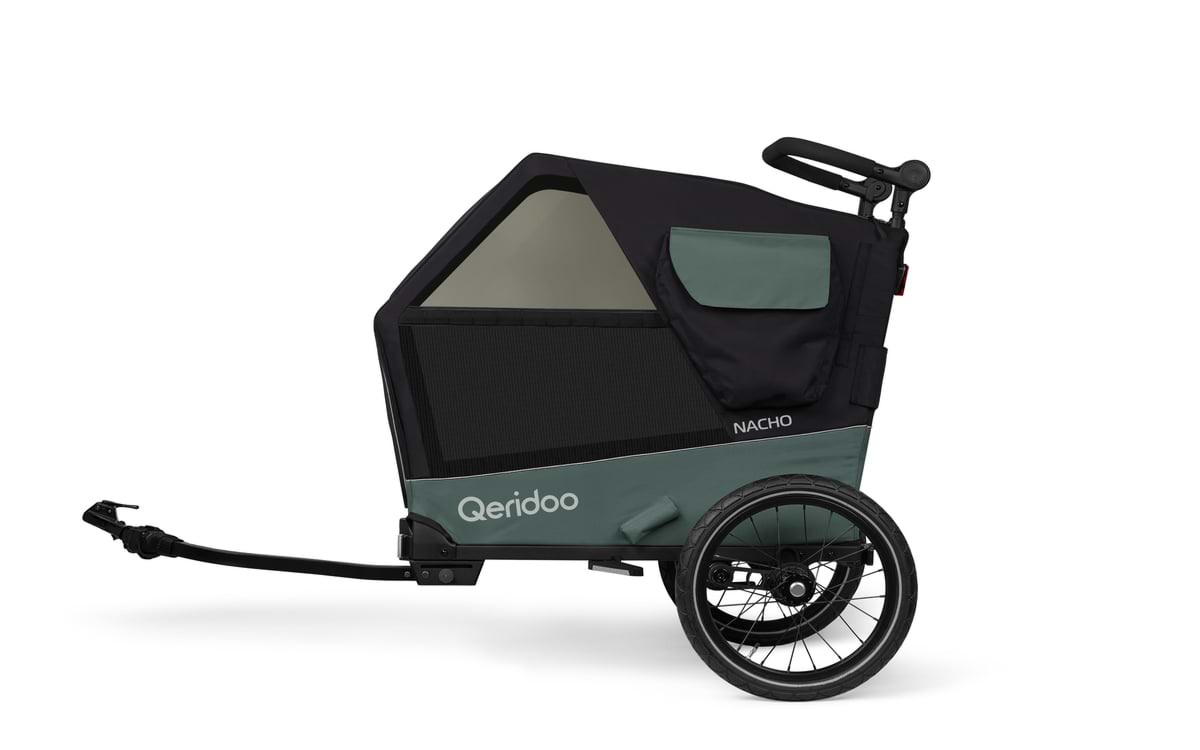
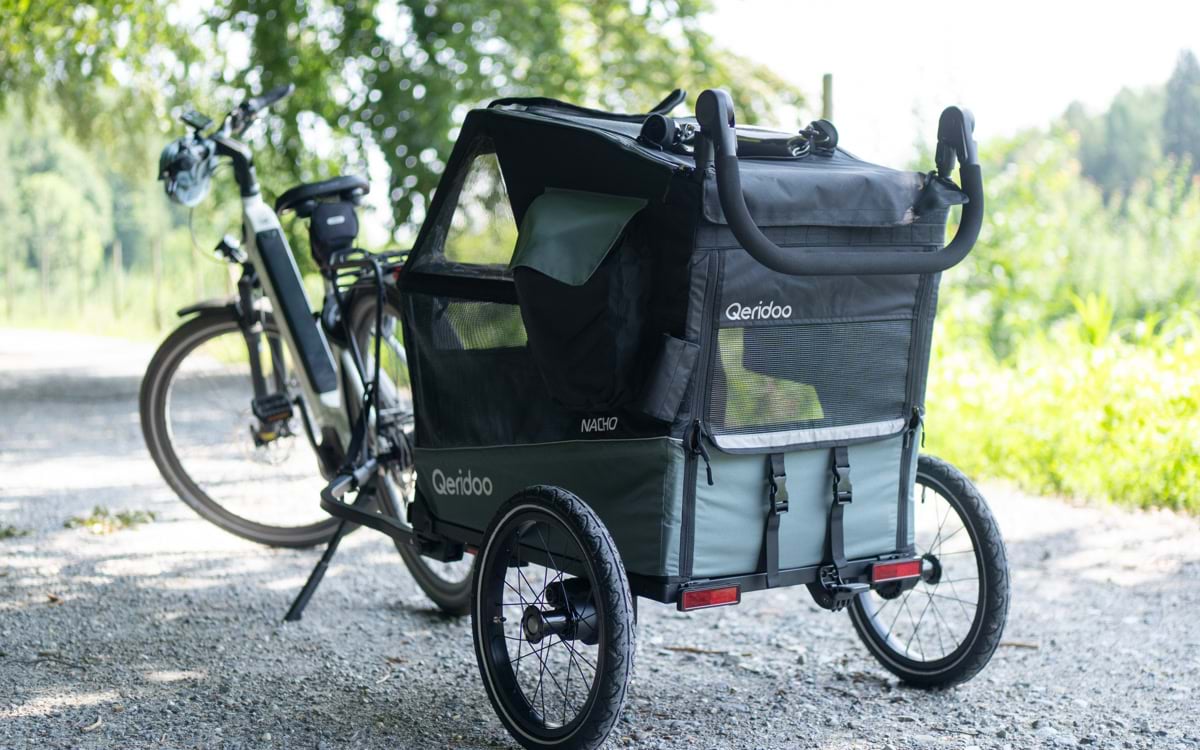
With the Nacho dog trailer, Qeridoo has exactly these requirements in mind:
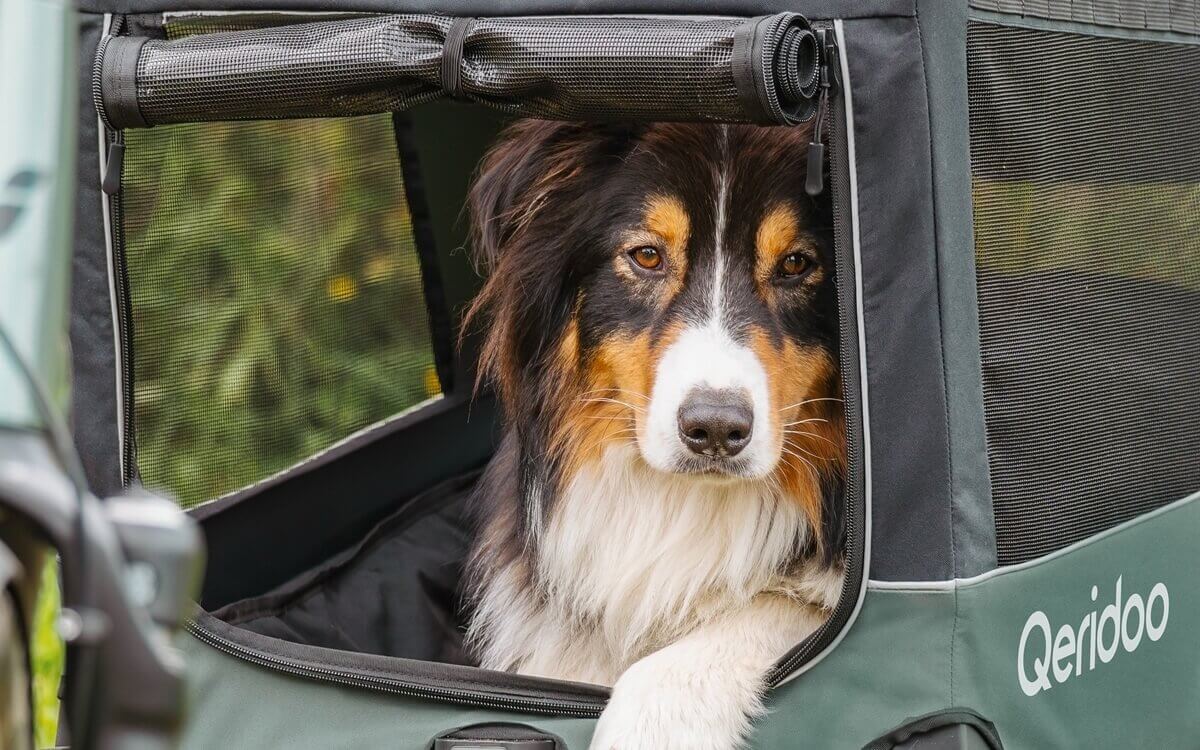
a generous tailgate and an additional entrance at the front make getting in easier. Large mesh panels provide a
pleasant climate during the ride. Two integrated safety leashes give your dog extra hold while riding without
restricting its freedom of movement.
The suspension also makes an important contribution: it evens out bumps and makes the ride noticeably
calmer for your dog. The becco coupler system also lets you hitch and unhitch the trailer
securely in seconds.
The right size of trailer is crucial for your dog to feel comfortable inside:
Qeridoo Nacho M: maximum dog weight 25 kg, permissible total weight 42 kg,
dog bed lying area approx. 43.5 x 65 cm, clearance width 78 cm, becco coupler system, usable as a bicycle trailer and buggy
Qeridoo Nacho L: maximum dog weight 35 kg, permissible total weight 53.5 kg,
lying area 48 x 76 cm, clearance width 86 cm, becco coupler system, usable as a bicycle trailer and buggy
Qeridoo recommends: take enough time when buying a dog trailer and try out together with your dog whether the size and
entrance really fit. A trailer in which your dog feels comfortable from the start makes the whole familiarization process much easier.
Sources
Kim, B. S. (2025). A review and survey study on the training frequency, session and time on acquisition in dogs. Korean Journal of Veterinary Service, 48(3), 181–188. https://doi.org/10.7853/kjvs.2025.48.3.181
FAQ – The most frequently asked questions about getting used to the bicycle trailer
Can I transport my dog in the bicycle trailer in hot weather too?
At high temperatures it is particularly important to ensure sufficient air circulation and regular drinking breaks. Plan the ride for the cooler morning or evening hours where possible and watch your dog for signs of overheating such as heavy panting.
Does my dog need a harness when sitting in the bicycle trailer?
A well-fitting harness in combination with the safety leashes in the trailer provides additional support during braking maneuvers or on uneven ground. A normal collar is less suitable for this, as it can put pressure on the neck during sudden movements.
Can I transport two dogs together in one trailer?
That depends very much on the size and weight of both dogs and on the permitted load of the particular model. The dogs should also get on well, as being cramped can cause stress in the long run, even if they otherwise get along fine.
Should a dog first get used to the trailer when it is stationary or moving?
Always in the stationary trailer first. Only once your dog is relaxed there do dry runs follow, and then the first rides.
Should I take my dog for a walk before the bike tour?
A short walk before the tour helps burn off excess energy and makes sure your dog can relieve itself before the ride. That often makes it calmer and more settled during the ride itself.
How do I clean the bicycle trailer after the ride?
Removable padding or blankets can usually be washed separately, while the rest of the interior can be wiped with a damp cloth. Regular cleaning also prevents odors that some dogs find unpleasant.
How should I react if my dog reacts to other cyclists or dogs along the way?
Stay calm and, where possible, keep riding rather than stopping, as coming to a halt often increases the excitement. Distraction through calm words or a chew can help to bring the attention back to you.