Riding comfort and safety: the right tire pressure for the bicycle trailer
The right tire pressure for the bicycle trailer promotes not just riding comfort. It also ensures more safety for your child and a longer service life of the tires. What you should consider and how you find the ideal air pressure, you'll learn here.
Wilhelm Wenzel
Head of development department
The key points in brief
All about tire pressure of the bicycle trailer at a glance
Particularly with the bicycle trailer, the right tire pressure
is crucial –
because only this way you're on the road stably, comfortably and safely. The optimal air pressure depends on various factors:
the tire size,
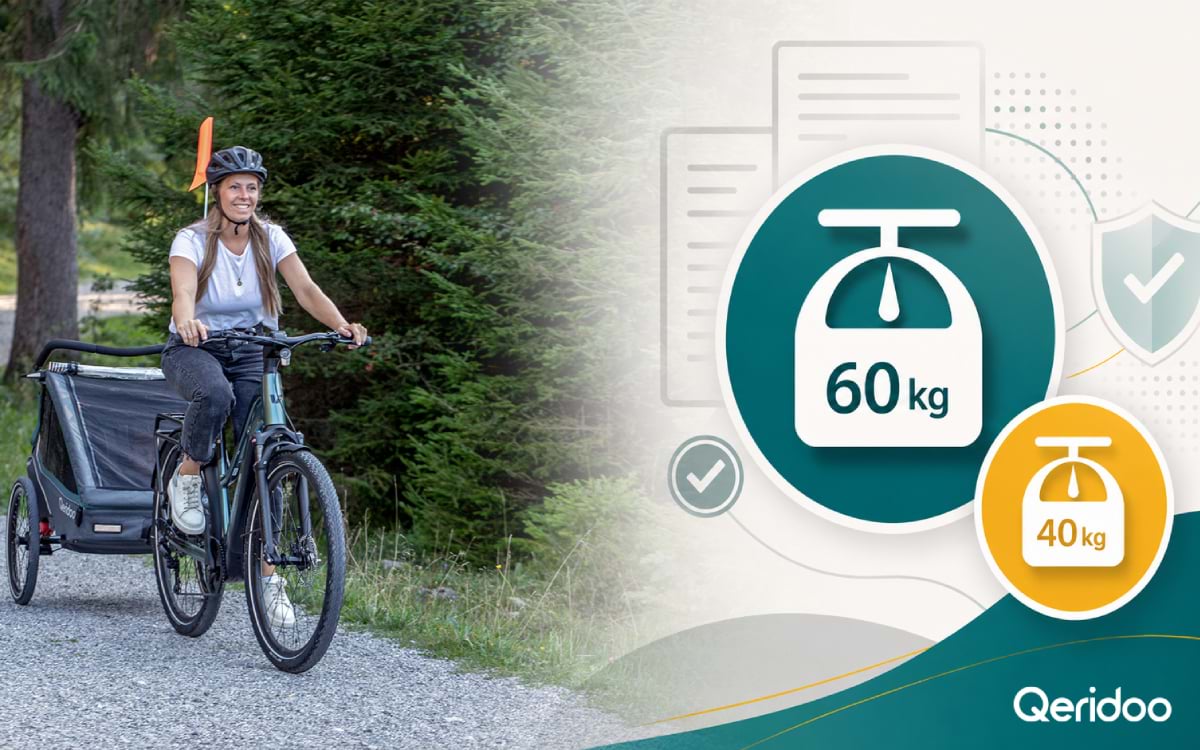
the total weight of the trailer (including child and luggage),
and the surface you're on.
Here you should always exactly pay attention to the minimum and maximum tire pressure values specified by the manufacturer –
these are usually on the tire sidewall or in the user manual. The optimal value is usually within
this range.
For our child bicycle trailers the rule:
The recommended air pressure for the running wheels is
between 2.5 and 3 bar (35–43 psi). That ensures the perfect balance
of stability and suspension. Too little air increases the rolling resistance and
can in the long run damage tube and rim – too much air makes
the ride uncomfortable and reduces the damping effect.
For the buggy wheel ,
the air pressure should not exceed 1.9 bar (28 psi). Here less
is more: a softer buggy wheel makes maneuvering easier and ensures
a pleasant running behavior when pushing – particularly on asphalt.
Important: Check the air pressure regularly – best
before every tour, but at least once a month. A pressure gauge on
the air pump helps with precise readjustment.
Safety and comfort
Why is the right tire pressure important for bicycle trailers?
Whether on the way to daycare or on a weekend tour through the forest – the right tire pressure is more than just
a technical
detail. It influences riding feel, safety and
also the longevity of your bicycle trailer.
The tire pressure is usually specified in bar (metric) or psi (pounds per
square inch). Often you'll find both values in the specification. 1
bar corresponds to about 14.5 psi.
1. Safely on the road with the right air pressure in the bicycle trailer
The right air pressure protects not just the tires, but also your child.
Particularly on gravel paths, in curves or on uneven surfaces, the matching pressure ensures
stable, controlled handling.
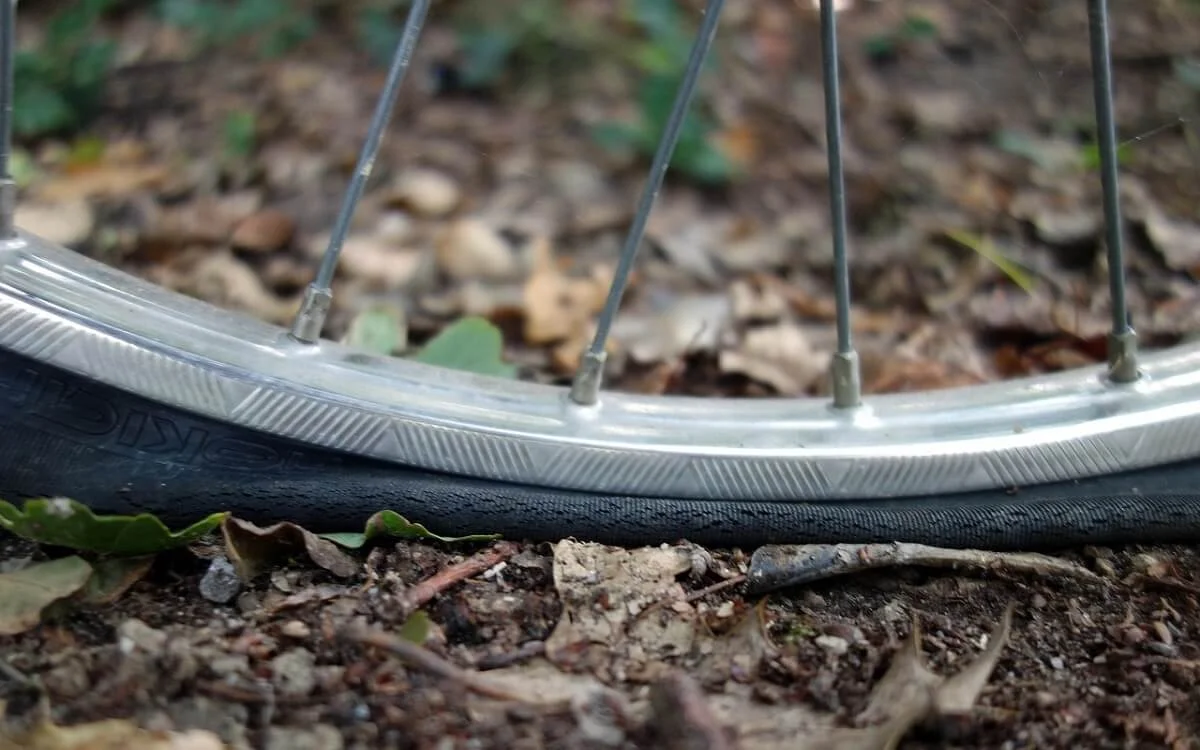
Too low tire pressure on the bicycle trailer has negative effects on the handling.
If the pressure is too low and below the permitted minimum value,
the risk of punctures rises, for example from pinch flats or sharp objects.
This can in the long run damage tube and rim.
Too much pressure on the other hand reduces the ground grip, makes the ride bumpier
and can in extreme cases even lead to the tires bursting.
Thanks to the special geometry and the low center of gravity, our bicycle trailers
generally rarely tip. Still the rule: only with good ground contact –
that is, the right tire pressure – are you really safely on the road.
Some of our bicycle trailers are equipped with high-quality Schwalbe tires,
which provide high comfort and outstanding running performance with the lowest possible wear
. Such as our model
Kidgoo FIDLOCK Edition.
The special tread pattern in combination with the robust rubber compound ensures reliable
traction – even in wet conditions and on changing surfaces. The
integrated puncture protection minimizes the risk of punctures by glass, nails
or sharp stones.
Thanks to the low rolling resistance, the trailer can be pulled particularly easily – for more
ease in everyday life and on longer routes.
2. More riding comfort for you and your child
The right tire pressure on the bicycle trailer plays an important role for riding comfort:
It helps cushion ground unevenness and make the ride as
pleasant as possible for your child.
Together with the leaf-spring damping system of our child bicycle trailers, the right
tire pressure ensures optimal suspension and stability – without any swinging.
If the air pressure is too low, the spring effect of the tires diminishes.
If it's too high, the tires are too hard and give less, which in turn
passes shocks directly through.
The right tire pressure together with the suspension ensures good riding comfort.
Tip:
On level ground and asphalted roads, a higher tire pressure ensures less
rolling resistance. On soft ground – like on forest or field paths – a lower
pressure ensures more traction and comfort. Definitely ride slowly over curbs and
potholes to avoid the risk of pinch flats and also tipping of the trailer.
Measure tire pressure
Check bicycle trailer air pressure: here's how
You should regularly check the tire pressure. Because even when not in use,
the air pressure can drop monthly by up to 1 bar. Particularly before longer
bike tours you should make sure that the pressure in the tire is right.
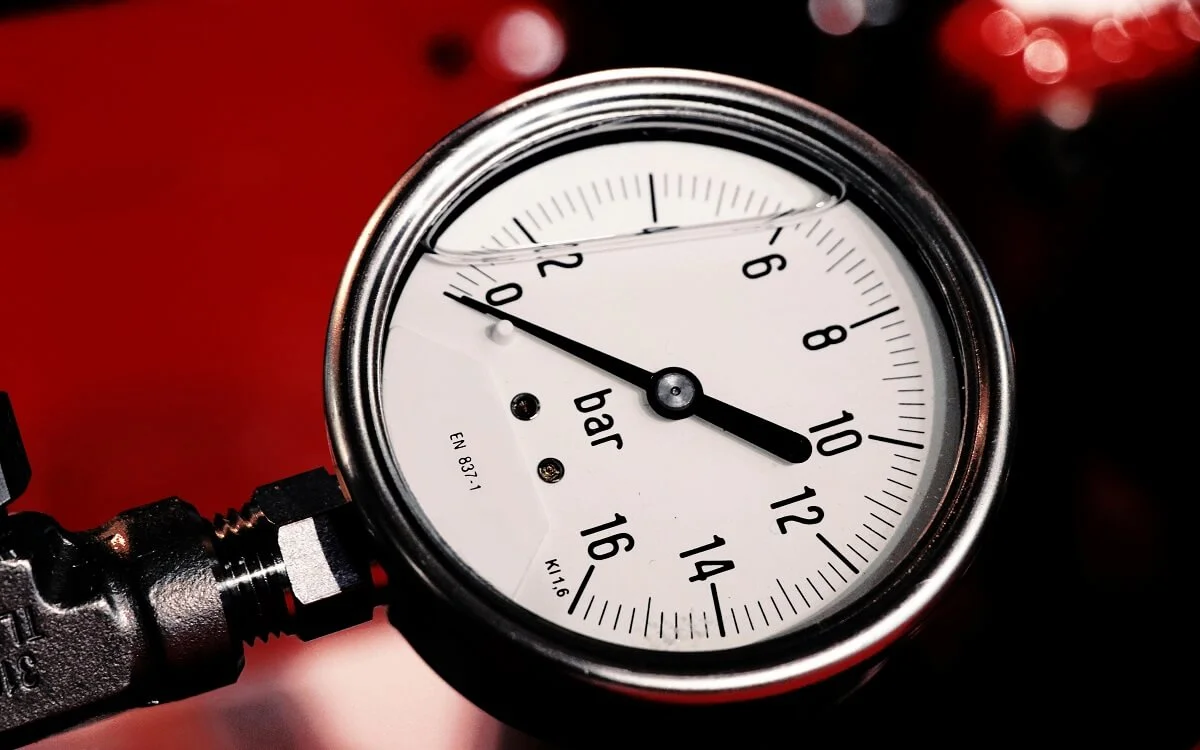
It's best to use a floor pump with integrated pressure gauge.
It shows you the pressure precisely – this way you avoid too little or too much
air in the tire.
The tire pressure can be measured with a floor pump with integrated pressure gauge.
As soon as the pump head
sits correctly on the valve
,
the pressure gauge shows the current pressure. If the pressure is too high, it can
be easily reduced: unscrew the valve cap, briefly press on
the valve – this way some air escapes.
It's best to note the optimal fill pressure on the pressure gauge with a
permanent marker. To find the optimal pressure, you should do a few
test rides – this way you find the best compromise of comfort,
safety and rolling resistance.
Note: The thinner the tire, the higher the air pressure should be.
Wide tires are usually more robust and get by with less pressure.
Also consider the ground condition, especially before longer
bike tours. The rule of thumb: higher pressure for smooth roads, lower
pressure for forest and gravel paths. Don't forget to take a small bicycle pump
with you – in case you have to pump on the road. Also the
right tool helps you in case of a flat
to be prepared.
Important: Checking the tire pressure only with thumb pressure is unreliable
– pressure differences are hard to detect this way. From about 2 bar the
tire feels well-filled, but can still have too little pressure. If you
don't have an air pump with pressure gauge to hand, squeeze the tire sidewalls together –
here low pressure can be detected more easily than on top of the casing.
If you want to replace your running wheels on the bicycle trailer, you can find
them in our spare parts catalog or with the
spare parts finder of the respective model.
Last updated: February 5, 2026
Discover more articles
Deepen your knowledge with our recommended articles
FAQ – The most frequently asked questions about tire pressure on a bicycle trailer
How often should I check the tire pressure on a bicycle trailer?
At least once a month – but best of all before every outing, especially on longer tours. Even when not in use, air pressure can drop by up to 1 bar per month. A floor pump with an integrated pressure gauge is the most reliable tool for an accurate pressure check.
How do I measure bicycle trailer tire pressure correctly?
Best of all with a floor pump with a pressure gauge: place the pump head on the valve and the gauge shows the current pressure. If the pressure is too high, it can be released by pressing briefly on the valve. Checking tire pressure by thumb alone is unreliable – from about 2 bar a tire feels well filled but can still have too little pressure.
Does the surface affect the optimal tire pressure on a bicycle trailer?
Yes, considerably. On paved roads a higher pressure is recommended for lower rolling resistance. On gravel, forest or field tracks the pressure should be somewhat lower – that improves traction and cushioning comfort. The rule of thumb: higher pressure for smooth paths, lower pressure for soft or uneven terrain.
What happens if the tire pressure in the bicycle trailer is too low?
Air pressure that is too low increases rolling resistance, which makes riding considerably more strenuous. It also increases the risk of pinch flats, and over time the tube and rim are damaged. The cushioning effect of the tire also decreases, which worsens ride comfort for child and luggage.
What happens if the air pressure in a bicycle trailer tire is too high?
Too much pressure makes the tires too hard, which passes vibrations straight on to the occupants and makes the ride noticeably less comfortable. At the same time grip is reduced – a safety risk especially on bends or on uneven ground. In extreme cases excessive air pressure can even cause the tire to burst.
Which tire pressure does Qeridoo recommend for the buggy wheel?
For the buggy wheel Qeridoo recommends an air pressure of no more than 1.9 bar (28 psi). A softer buggy wheel makes steering and maneuvering considerably easier when pushing and provides – especially on asphalt – pleasant, even running.
Should I adjust the tire pressure when carrying heavy luggage in the bicycle trailer?
Yes, the total weight of the trailer – child, luggage and load together – affects the ideal tire pressure. With a heavier load it can make sense to move the pressure somewhat closer to the recommended maximum, in order to avoid pinch flats and excessive tire deformation. Always observe the manufacturer's specifications on the tire sidewall as the absolute upper limit.