Cycling with a dog gives your four-legged friend more exercise and gets you moving too. To keep your outing together safe, what matters most is good training and the right equipment.
Nikolai Boldt
CEO
The key points in brief
Cycling with a dog
Legally permitted: Under § 28 StVO you may take your dog along on a bicycle, as long as
you can control it sufficiently.
Minimum age: A dog should not run alongside a bicycle before 15 to 18 months,
large breeds often need up to 24 months.
Not every breed is suitable: Short-legged, very small or short-nosed (brachycephalic)
dogs are not suited to running alongside a bicycle.
Distance: Trained, healthy dogs manage about 5 to 15 kilometers,
depending on pace, weather and fitness.
Equipment: A chest harness instead of a collar, a leash holder with damping and reflective gear are a must.
Alternative: For puppies, senior dogs or sick dogs, a suspended dog trailer is the comfortable and safe solution.
Cycling with a dog
5 tips for beginners
Sunshine and headwind make a bike tour in summer particularly nice – but heat and direct sun
should
not be underestimated, especially when a baby is on board.
Cycling in heat can also strain your child in the bicycle trailer.
Because especially babies and toddlers cannot regulate their body temperature and are more susceptible to overheating and
heat stress. So the safety of your child in the trailer is ensured,
you're well prepared with the following tips.
Tip #1: Is cycling with a dog allowed?
Yes, cycling with a dog is permitted in Germany. The basis is § 28 of the Road Traffic Regulations, which provides an exception to the general ban on leading animals from a vehicle (1). The condition: you must be able to control your dog "sufficiently" at all times so that it does not endanger traffic. Local leash laws remain unaffected.
In Austria, leashing a dog to a bicycle is generally prohibited under § 99 (3) (f) StVO – violations carry fines of up to 726 euros (2). In Switzerland, by contrast, it is permitted as in Germany. Before touring abroad it is therefore worth checking the local rules.
Tip #2: Which dog is suitable for cycling?
Not every dog is suitable; breed, health and age are decisive. Well suited are enduring,
medium-sized to large breeds: Border Collie, Husky, Greyhound, Retriever, Setter or German Shepherd.
Particularly unsuitable are very small, short-legged dogs such as Dachshunds, very heavy breeds and brachycephalic dogs such as Pugs or
French Bulldogs. You should also not overtax old or chronically ill dogs.
Enduring, medium-sized to large dog breeds are well suited to cycling.
A dog should not run alongside a bicycle before 15 to 18 months, large breeds often not until up to 24 months. Before then, bones and joints are not yet fully developed and starting too early can lead to chronic joint problems.
You can still get a puppy used to a stationary or pushed bicycle in a playful way. A dog trailer is particularly good for this transitional period: the young dog can run alongside the bike in short intervals to get used to it and ride in the trailer for the tour itself.
Before the first training session it is also worth a check-up at the vet. This can rule out joint or cardiovascular conditions that could lead to serious complications when cycling with a dog.
How many kilometers can a dog run alongside a bicycle?
A healthy, trained dog manages about 5 to 15 kilometers at a moderate pace, and enduring breeds more than that under good conditions. How far your dog actually keeps up depends on various factors.
Breed & size: Endurance breeds run further than short-legged or brachycephalic dogs
Temperature: From about 15–20 °C you should reduce distance and pace
Surface: Forest and field tracks are gentler on the paws than hot asphalt
Age: Young and old dogs need shorter distances and more breaks
Increase the distance step by step and watch for signs of exhaustion such as heavy panting or stopping. The joints benefit from this caution too: with the right preparation, cycling with a dog is not harmful. What becomes problematic above all is constant running on hard asphalt or a skewed, one-sided posture.
Tip #3: What accessories do I need and how do I guide the dog safely?
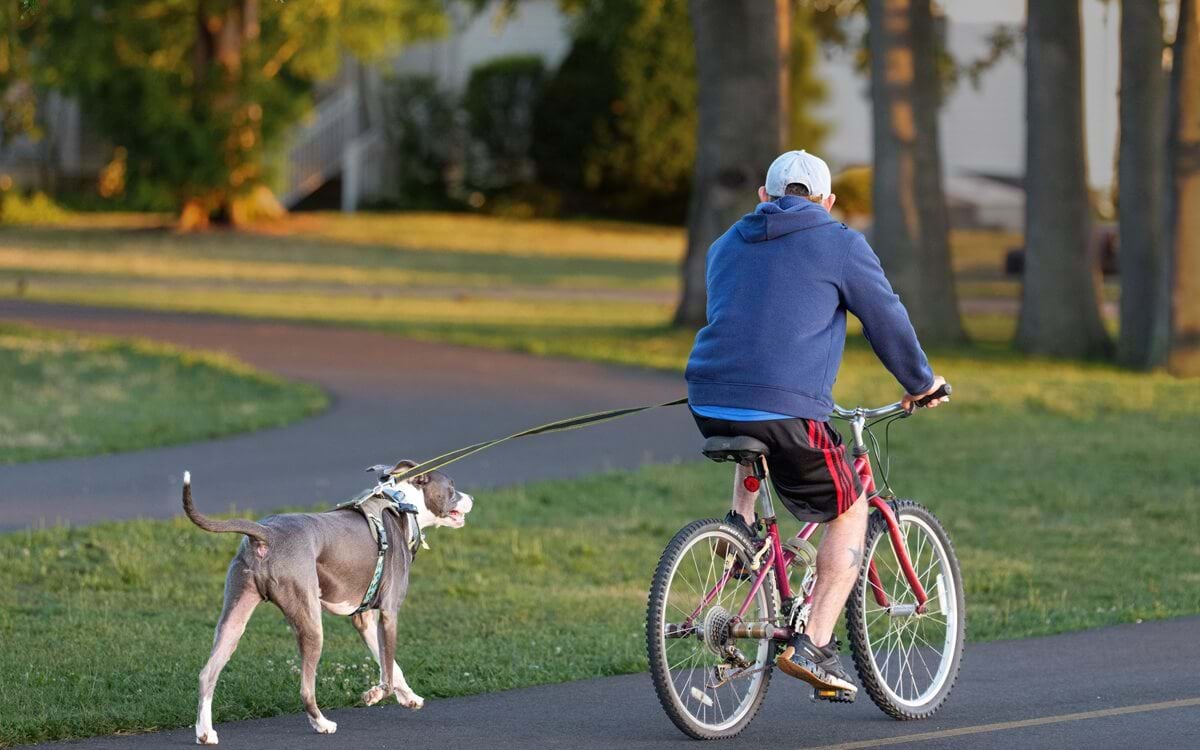
The basic equipment includes a padded chest harness and a leash holder (springer) with a tension spring. Also important
are reflective elements, water and a bowl, and paw protection on longer asphalt tours.
Get your dog used to cycling step by step.
Always attach the leash to the frame via a leash holder, never to the handlebar or your wrist, otherwise a sudden pull can cause a fall. The collar must be replaced by a harness that distributes the pulling forces evenly. Always keep your dog on the right, away from moving traffic.
Get your dog used to the bicycle step by step: first sniffing, then pushing while the dog walks alongside, then short, calm rides. Introduce commands such as "slow" or "stop" early on as well.
At the start it can help to practice as a pair. One person pushes the bike while the other leads the dog. Then you can get on the bike and set off at a pace that is comfortable for the dog. Allow several days to weeks for this; every dog learns at its own pace.
If your dog pulls or shows fear, it is better to go back a step in the training rather than force it. Running off-leash is only allowed where no leash law applies, and only with reliable basic obedience. When in doubt, a leash with a damped holder is always the safer choice.
Tip #4: When is a dog trailer worthwhile?
A dog trailer is worthwhile if your dog is too young, too old, ill or recovering. It is also the better
choice on long routes, in great heat or for small, short-legged breeds.
A dog trailer is worthwhile if your dog is too young, too old or ill.
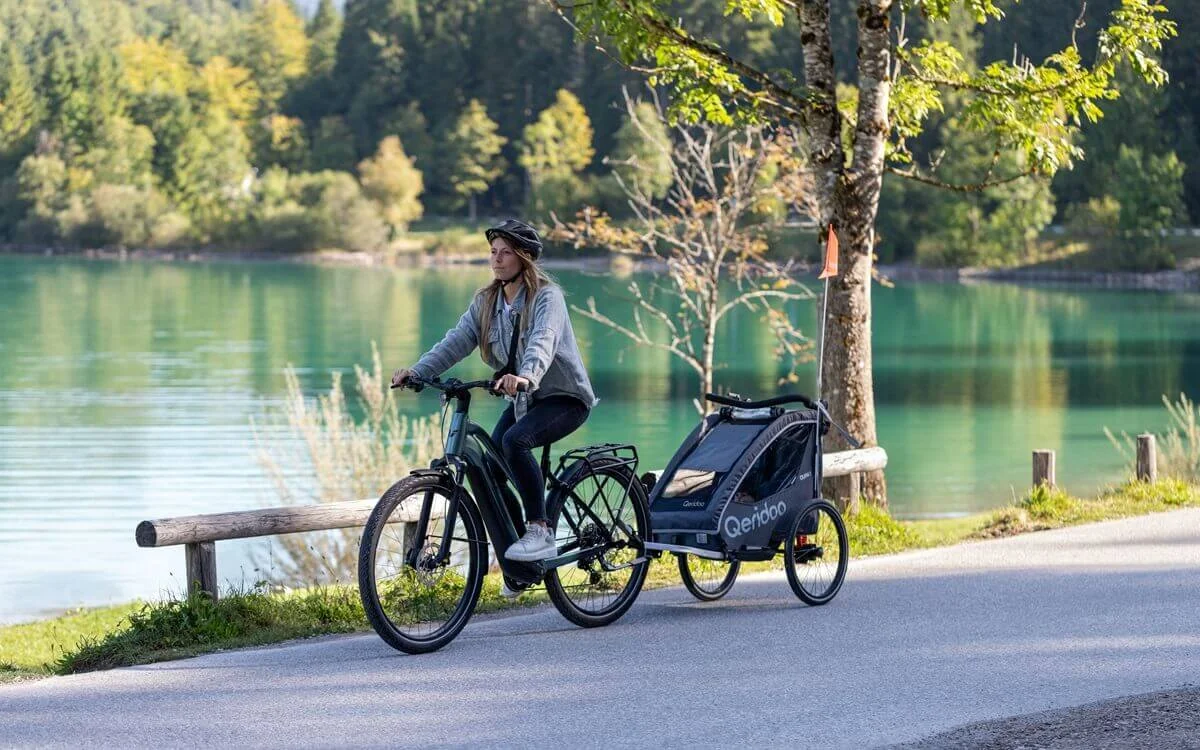
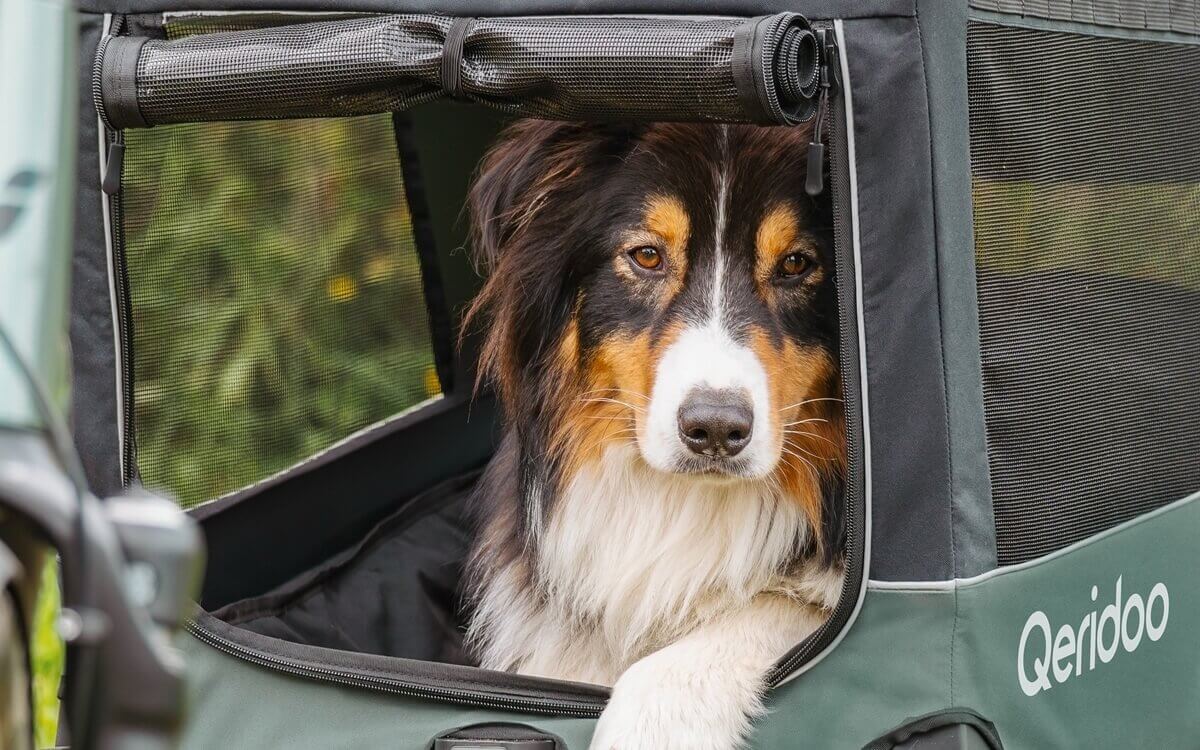
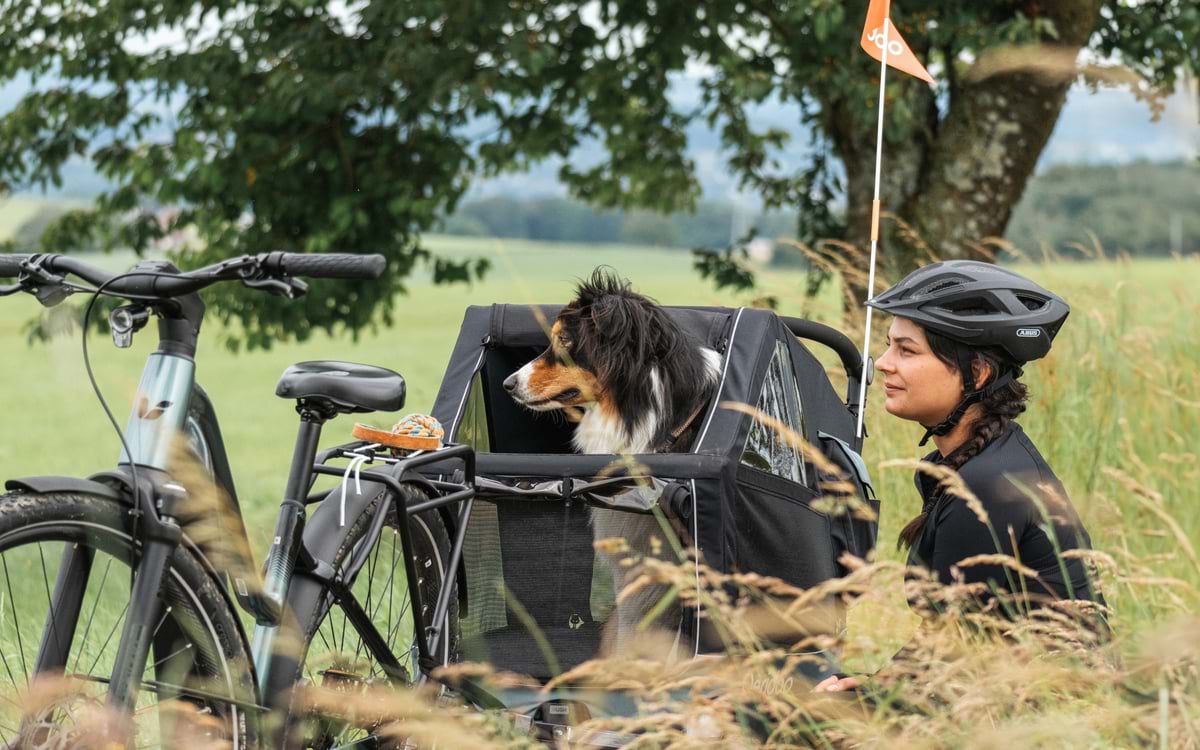
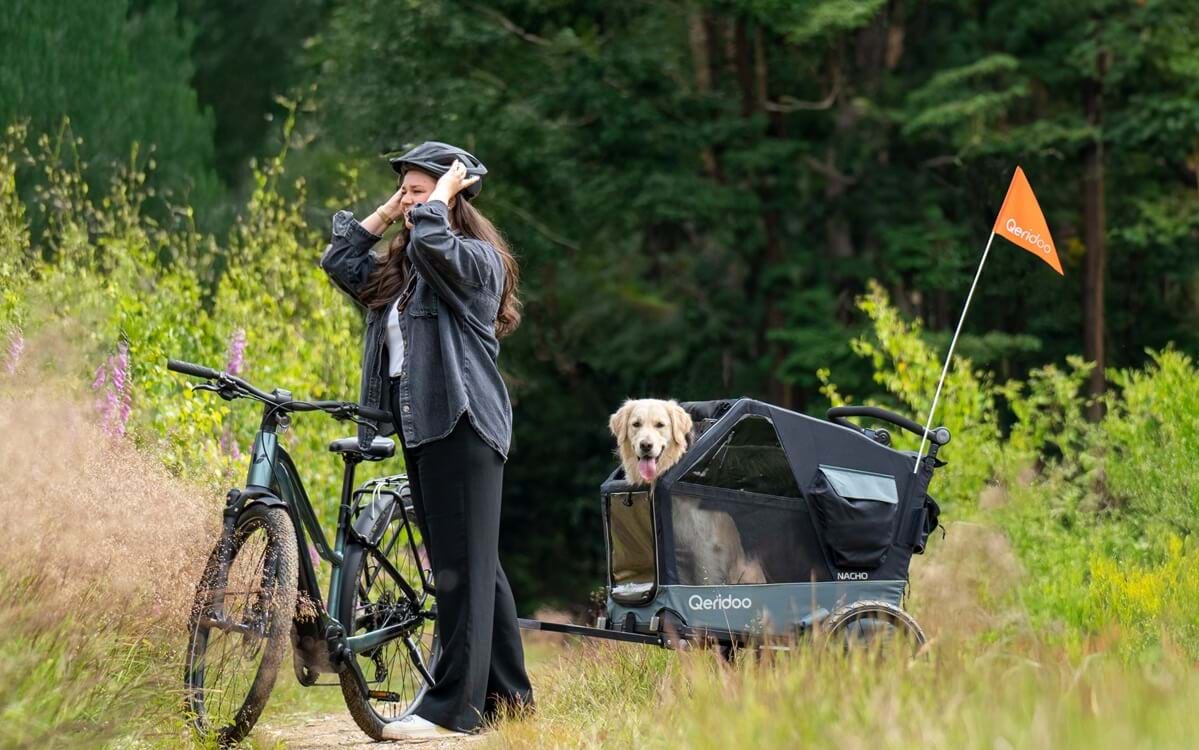
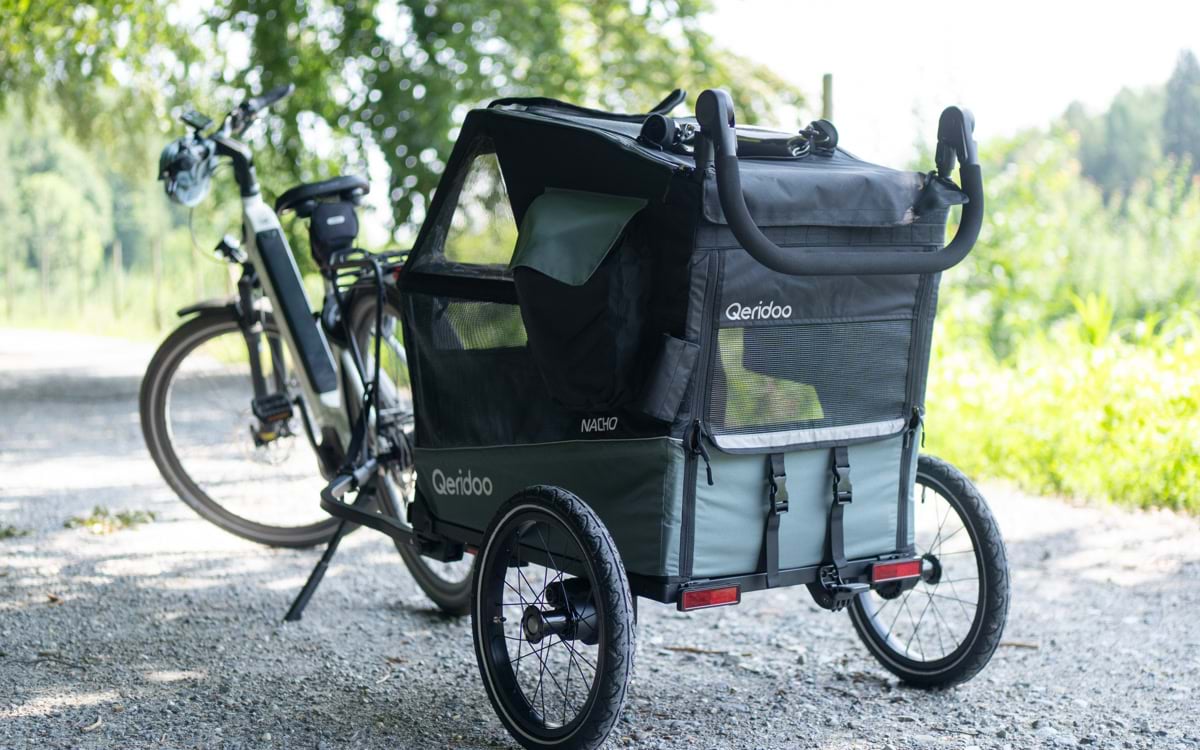
A suspended Qeridoo dog trailer offers considerably more protection than a bicycle basket: sheltered from wind, rain and
road dust, with enough room to lie down and turn around. Qeridoo is a safety expert for bicycle trailers and deliberately relies on a well thought-out
restraint system with two safety leashes inside.
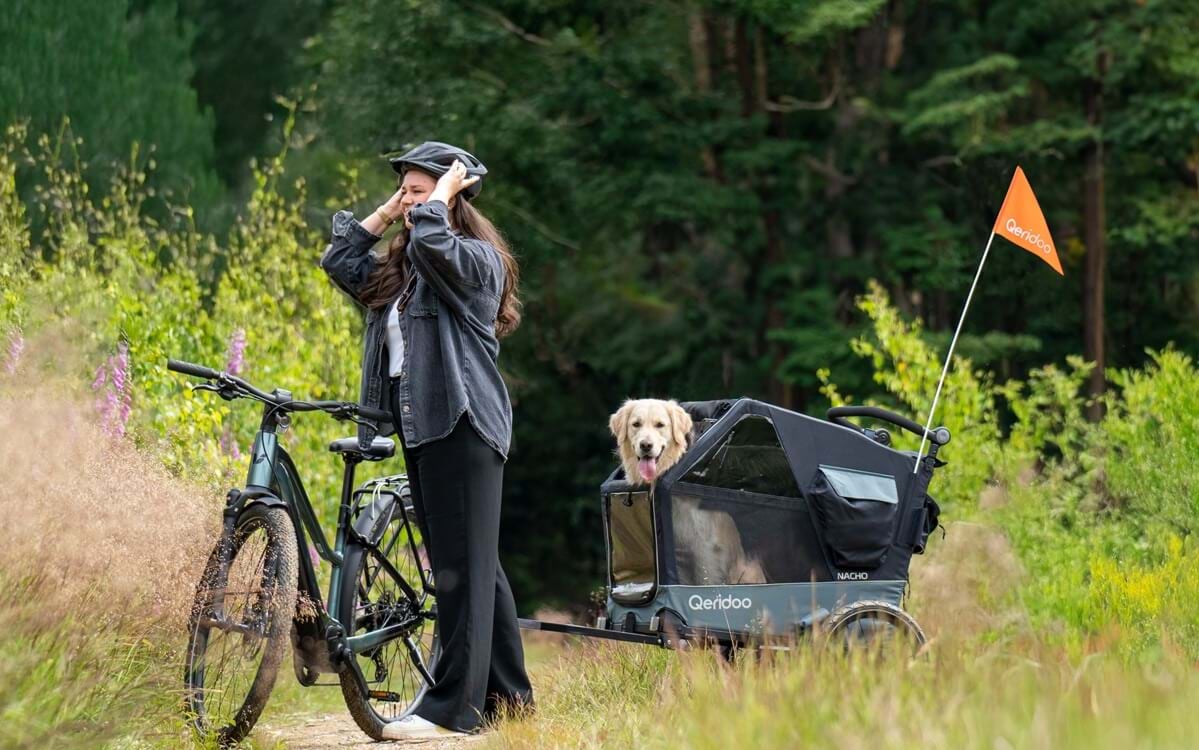
Particularly practical: With the air-filled buggy wheel the trailer converts into a buggy in no time. That way it
can also be used for walks, which is practical in everyday life.
Discover Qeridoo dog trailers now
Whether a walk around the block, an outing or an adventure: our dog trailer is the perfect companion for four paws. The Nacho offers comfortable room for your dog, whether as a bicycle trailer or as a buggy.
Ride at a calm pace, keep your distance from other road users and, where possible, avoid busy roads. Since one hand is often on the leash holder, you should ride especially carefully and avoid larger evasive maneuvers. In the dark, reflective gear on the dog is essential.
There are now around 10 million dogs in private households in Germany (3). Cyclists and dog owners therefore meet frequently on shared paths. Consideration on both sides makes traffic safer for everyone.
FAQ – The most frequently asked questions about cycling with a dog
Do you need a permit to cycle with a dog?
No, no separate permit is needed in Germany. Only the requirements of § 28 of the German road traffic regulations apply.
What minimum size should my dog be in order to run alongside the bicycle?
As a rough guide, a shoulder height of about 40 centimeters applies, as smaller dogs reach their limits more quickly at the pace of a bicycle and are put under greater strain. For smaller dogs or those with very short legs, a bicycle trailer is the better choice.
Is a bicycle basket or a dog trailer better?
A bicycle basket is mainly suitable for small, light dogs on short outings. A trailer, by contrast, offers more room and, besides better comfort, is also the safe solution for longer tours or larger dogs.
How do I recognize that my dog is overheating during the ride?
Signs of overheating are heavy, labored panting, sluggishness, staggering or the desire to lie down and not carry on. In that case you should stop immediately, offer your dog a shady, cool spot and water, and seek veterinary advice if the symptoms persist.
How long does it usually take for a dog to get used to the bicycle trailer?
That varies from dog to dog, but getting used to it usually takes a few days to a few weeks. What matters is that the dog gets in voluntarily and stays relaxed in the trailer even over bumps, rather than being rushed.
May I take my dog along on the bicycle in any weather?
In great heat, heavy rain or icy conditions you should switch to the trailer or postpone the tour, as these conditions are considerably more demanding for running dogs than for you on the bike. Mild, dry weather is best suited to longer training sessions.