Air tire vs. air-chamber tire vs. solid rubber: differences in bicycle trailers
Whether daily ride to kindergarten, sporty bike tour or trip into nature – the right tire makes the difference. It determines how smoothly your trailer runs, how comfortable the ride is and how much maintenance you have to invest. Learn here which tire is best suited for bicycle trailers.
The two rear wheels and the jogger wheel are usually air-filled wheels, but the front buggy wheel
may use a different type of tire. Here is an overview of the advantages and disadvantages of each:
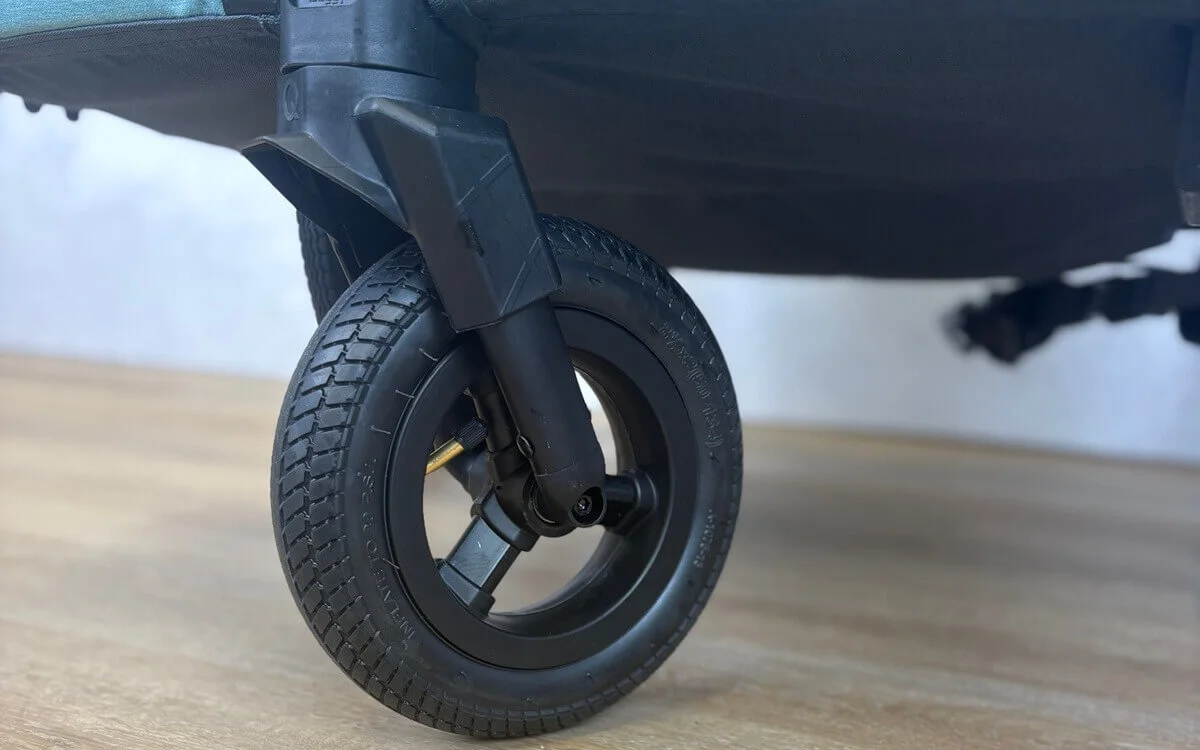
Air tire (8")
Advantages:
individual adjustment of air pressure
high comfort on uneven paths
flexible to use
very good damping and suspension
Disadvantages:
regular check and pumping up if necessary
Qeridoo:
From QUPA Plus upwards (KIDGOO, SPORTREX) we use exclusively air tires. They offer clear advantages on natural paths, field and
forest paths as well as in sporting activities.
Comparison
Advantages and disadvantages: the three tire types in comparison
Choosing the right tire type is decisive for riding comfort, maintenance and everyday usability of your bicycle trailer. Depending on the area of use, air, air-chamber and solid rubber tires bring different strengths and weaknesses.
Air-filled wheel – maximum comfort and flexibility
The air-filled wheel offers the highest riding comfort and is particularly versatile. Thanks to the individually
adjustable tire pressure of the bicycle trailer, the suspension can be ideally
adapted to the
surface – whether asphalt, gravel or forest tracks. These wheels stand out with excellent damping and are ideal for
sporting activities such as jogging or longer tours in nature.
An air-filled wheel provides more comfort and flexibility.You can adjust the air pressure to suit the surface: the harder the ground, the higher the air pressure should be for
optimal riding comfort. On soft and uneven surfaces, less pressure in the tire is enough.
Note that tire pressure also rises in summer due to the heat. So the tire should not be inflated to the maximum permissible
pressure. As a rule of thumb, a temperature change of 10 degrees makes the air pressure rise or
fall by 0.1 bar. Air-filled wheels do require some maintenance, though: the air pressure should be checked regularly and topped up
when needed.
From the QUPA Plus model range onwards – and therefore also on our Kidgoo and Sportrex – we consistently use pneumatic tires for the tires, jogger wheel and buggy wheel. They offer clear advantages on natural tracks and
in sporting use. When using the childrens bicycle trailer
as a buggy, air-filled wheels also prove to be the best solution for the buggy wheel.
Comparison
Choosing the right tire type for your bicycle trailer
Choosing the right type of tire depends heavily on the surface you ride on and how you want to use your Qeridoo bicycle trailer. Comfort, maintenance effort and durability all play a decisive role.
Air-filled vs. air-chamber vs. solid rubber tires compared
Use
Air-filled wheel
Air-chamber wheel
Solid rubber tire
Asphalt
++
+++
+++
Cobblestones
++
+
+
Gravel tracks
+++
++
+
Field tracks
+++
++
+
Forest tracks
+++
+
+
For jogging/sport
+++
+
-
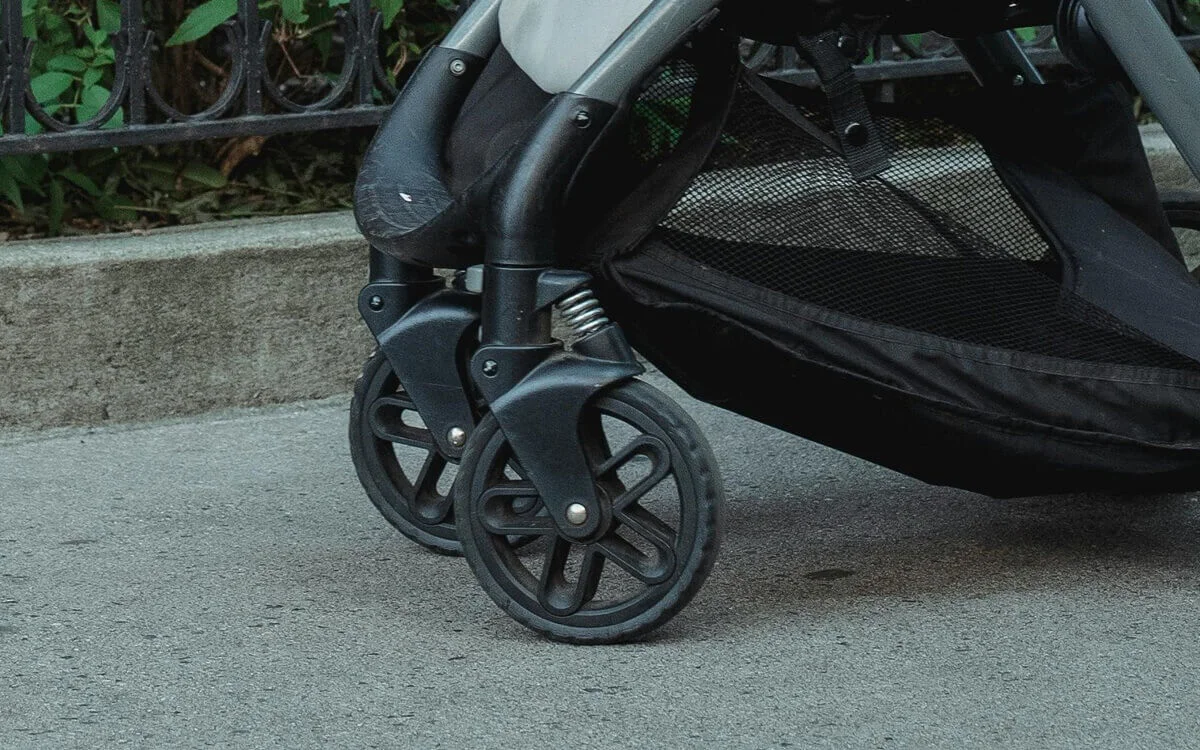
Air-chamber tire
Advantages:
maintenance-free,
nearly indestructible,
comfortable on paved, level surfaces,
no air check needed
Disadvantages:
less damping on uneven paths,
less flexible,
no ideal damping
Qeridoo:
Suitable for urban use, but not installed on our trailers.
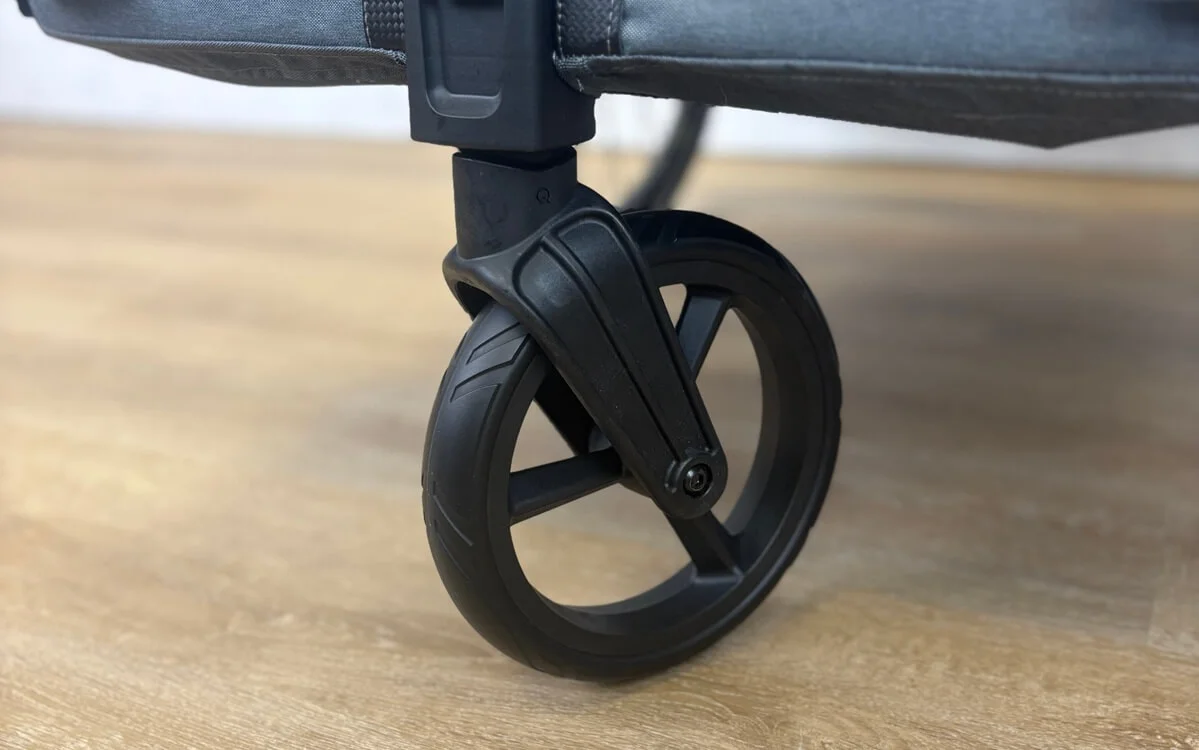
Solid rubber tire
Advantages:
extremely robust,
maintenance-free,
no flats possible,
very long-lasting,
cheaper
Disadvantages:
little damping,
low comfort on uneven paths,
very hard
Qeridoo:
The solid rubber wheel is the cheapest entry-level alternative and is used in our QUPA.
Air-chamber wheel – maintenance-free and durable
The air-chamber wheel combines some of the advantages of the air-filled wheel with the maintenance-free nature of a solid rubber tire. It
is virtually
indestructible, needs no pressure checks and runs particularly quietly on paved paths. That makes it ideal for
everyday urban use and short distances on asphalt. They are therefore often fitted to strollers.
Air-chamber tires mean low maintenance and long life.
It consists of a foamed plastic wheel with many small air bubbles inside. This gives the wheel
itself a certain damping effect, which further supports riding comfort.
The downside is the lower damping on uneven paths. For sporty riders or frequent use of the bicycle trailer for jogging on natural ground it offers less comfort.
Solid rubber tires – sturdy, inexpensive and completely puncture-proof
Solid rubber tires are the most robust and most affordable alternative. They are completely maintenance-free, puncture-proof
and
extremely durable. For budget-conscious buyers or occasional use in particular, they are a solid choice.
Solid rubber tires are inexpensive and particularly sturdy, but offer little comfort.
The hardness of the material comes at the expense of riding comfort, however: on uneven ground, shocks pass straight through,
which makes the ride less pleasant. On our entry-level QUPA 2022 model this
type of tire is fitted to the buggy wheel, because here freedom from maintenance comes first.
Discover Qeridoo childrens bicycle trailers now
Discover our popular childrens bicycle trailers now, as one-seaters or two-seaters.
FAQ – The most frequently asked questions about air wheels, air chamber wheels and solid rubber tires on bicycle trailers
Which wheel is the most comfortable for a bicycle trailer – air wheel, air chamber wheel or solid rubber?
The air wheel offers the highest ride comfort. The adjustable air pressure lets you match the cushioning to the surface – whether asphalt, gravel or forest track. The air chamber wheel is also pleasant on paved paths, but falls short on uneven terrain. The solid rubber tire offers barely any damping and is therefore the least comfortable, especially on uneven routes.
Can an air wheel on a bicycle trailer get a puncture?
Yes, unlike the air chamber wheel and the solid rubber wheel, an air wheel can get a flat, as it contains a tube. In return it offers the best damping effect. Anyone who depends on puncture resistance and rides mainly in the city can switch to an air chamber wheel or solid rubber tires – both are puncture-proof.
How often do I have to check the air pressure on a bicycle trailer?
The tire pressure of an air wheel should be checked regularly – ideally before longer outings. In summer the heat raises the pressure by about 0.1 bar per 10 degrees of temperature increase, which is why the tire should not be filled to the maximum value. Air chamber wheels and solid rubber tires, by contrast, need no pressure check at all.
Which type of tire is suitable for a bicycle trailer used for jogging?
For jogging tours and sport on natural surfaces, only the air wheel is recommended. It absorbs bumps effectively and protects the child from vibrations. The air chamber wheel offers considerably less comfort on such ground, and the solid rubber tire is unsuitable for jogging with a bicycle trailer.
Is the air chamber wheel the same as an air wheel?
No, the air chamber wheel contains no inflatable tube but consists of foamed plastic with tiny enclosed air bubbles. It therefore does not behave like a genuine pneumatic tire, but does have a certain damping effect. An air wheel with a tube cushions noticeably better and can be used more flexibly, but requires regular maintenance.
Which bicycle trailer tire is maintenance-free?
Both the air chamber wheel and the solid rubber tire are completely maintenance-free – no pumping, no pressure checks, no risk of punctures. The air wheel, by contrast, has to be checked regularly for the right air pressure and pumped up when needed.
Which tires does Qeridoo fit to its bicycle trailers?
From the QUPA Plus model onwards – and therefore on the Kidgoo and Sportrex too – Qeridoo consistently uses air wheels, as these deliver the best results on natural paths and in sporting use. The entry-level QUPA model has a solid rubber tire on the buggy wheel, because freedom from maintenance is the priority there. Air chamber wheels are not fitted to Qeridoo trailers.